
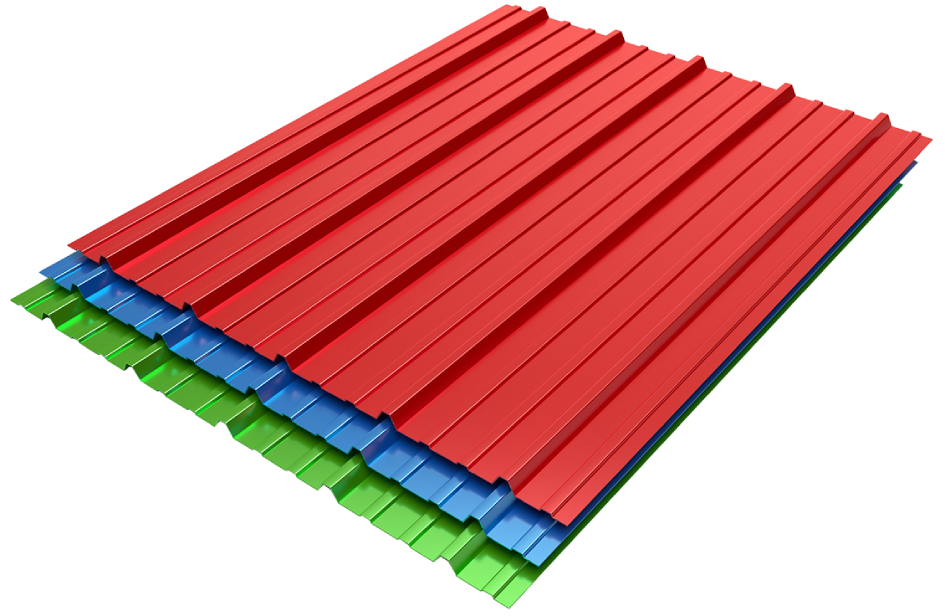

Your terrace is more than just an open space — it’s a place for relaxation, gatherings, and enjoying the outdoors.
But to keep it usable year-round, especially in India’s unpredictable weather, a durable roofing sheet for the terrace is essential.
Choosing the right roofing material not only provides protection from sun and rain but also enhances your home’s aesthetics and energy efficiency.
At Colour Suraksha, we provide high-quality colour-coated roofing sheets designed for long-lasting performance and modern looks.
Why Use Roofing Sheets for Terraces?
Installing roofing sheets on your terrace offers several benefits:
- ✅ Protection from Heat and Rain – Keeps your terrace cool in summer and dry during monsoon.
- ✅ Low Maintenance – Once installed, they need very little upkeep.
- ✅ Stylish Appearance – Available in attractive colours and finishes.
- ✅ Affordable Solution – Cost-effective compared to concrete roofs or traditional shade structures.
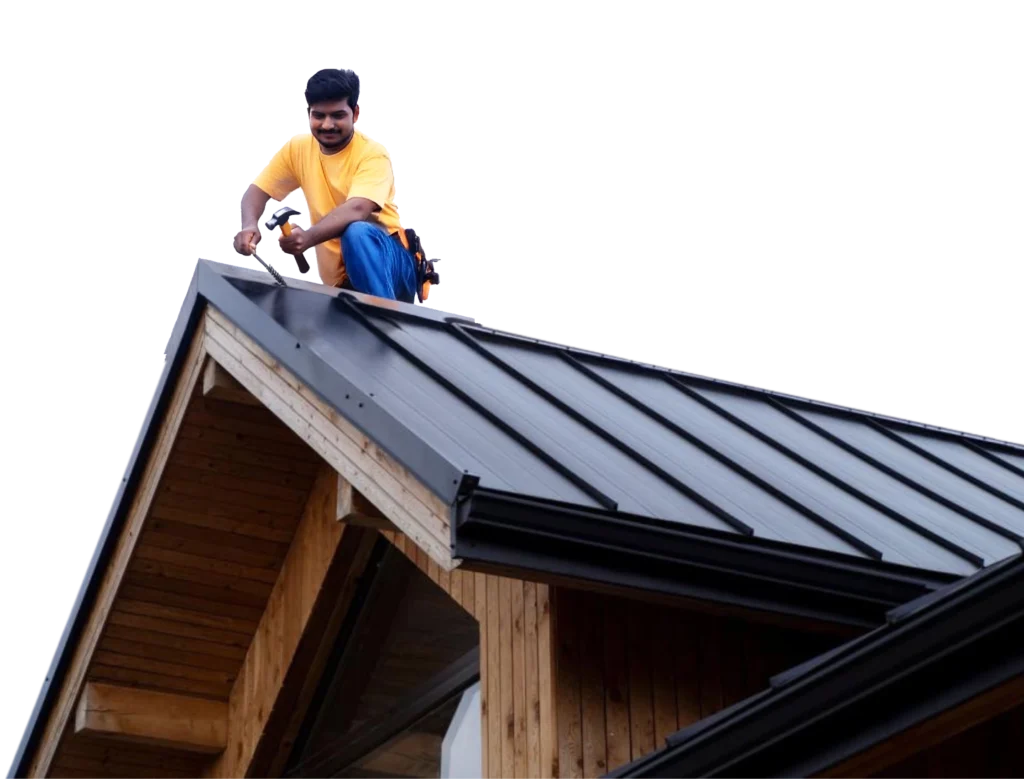
- ✅ Easy Installation – Lightweight and quick to fit.
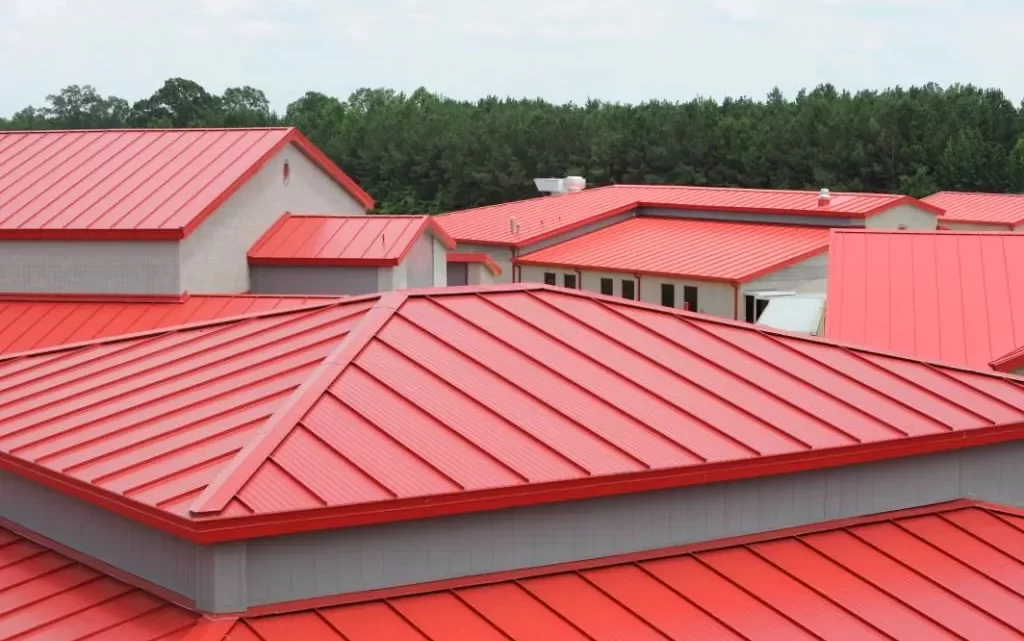
Top 5 Roofing Sheet Types for Terrace
| Type | What it is | Pros / Strengths | Drawbacks / Things to Consider | Best Use Cases |
| 1. Colour-Coated Metal Sheets (Steel or Aluminium with paint / protective coating) | Metal sheet (GI, Galvalume, aluminium) coated with layers of paint (polyester, SMP, PVDF etc.) to improve durability and aesthetics. | • Good durability; resists rust, provided coatings are good.• Available in many colours so good aesthetic appeal.• Reflects heat (if light colours or special finishes) → helps reduce terrace heat.• Lightweight relative to e.g. cement or tiles.• Low maintenance. | • Coating quality matters—cheap coatings fade, peel, or corrode.• Metal can get hot; need insulation/ventilation or reflective coating.• Noise in rain can be higher than some non-metal sheets.• Edges & overlaps must be well-sealed to prevent leaks. | Ideal for full terrace roofing where you want both protection & style. Good for homes in cities; areas needing quick installation. Also useful for carports, sheds, gazebos. |
| 2. Polycarbonate Sheets | Transparent or translucent thermoplastic material; available in solid or multi-wall sheets. | • Allows natural light — so the terrace can be semi-open yet bright.• Lightweight.• UV-treated versions reduce harmful rays.• Impact resistant in many cases.• Low maintenance. | • More expensive than plain metal or fibre-cement sometimes.• Can yellow over time if low grade / poor UV protection.• Thermal expansion issues; needs good mounting & gap allowance.• Lower sound insulation during heavy rain unless additional layers or backing are added. | Great for sit-outs, pergolas, patio roofs, skylights, greenhouses, sections of terrace where you want light but still some protection from sun/rain. |
| 3. Fibre Cement Sheets (Asbestos-Free) | Sheets made from cement mixed with fibres (cellulose or synthetic), moulded into profile (corrugated, etc.). Modern sheets avoid asbestos. | • Good fire resistance.• Sound damping (better than thin metal sheets in rain).• Resistant to rot, termites, etc.• Cooler underfoot compared to metal in the sun.• Durable when quality is good. | • Heavier → needs a more sturdy support frame.• More difficult to transport & install.• Limited colour/design options unless painted after installation.• Can crack under heavy impact. | Good for areas with heavy rainfall or hail, where noise or heat are concerns; also for rustic or traditional style homes; sheds etc. |
| 4. Bitumen / Asphalt / Fibre-reinforced Plastic (FRP) & Plastic Sheets | Includes bitumen sheets, FRP sheets, PVC or general plastic sheeting; sometimes reinforced with fibres or composites. | • Very waterproof; good sealing.• Lightweight, relatively easy to install.• Some offer good acoustic damping (rain sound).• Cheaper for temporary or semi-permanent structures.• Varied colour / finishes possible (especially plastic / FRP). | • Lifespan is often shorter than good metal or fibre cement.• Can degrade under UV exposure unless UV-stabilized.• Can be more flexible → risk of sagging unless properly supported.• Some types (bitumen) may be hot / emit odour initially. | Best for sheds, garages, temporary shelters, parts of terraces where full permanence isn’t needed, or where cost is constrained. |
| 5. Aluminium Roofing Sheets | Sheets made of aluminium (either plain or coated) — lighter than steel, naturally resistant to rust/corrosion. | • Excellent corrosion resistance (good for coastal areas).• Lightweight → less load on structure.• Good reflectivity, so better heat control.• Long lifespan if good grade aluminium.• Low maintenance. | • More expensive than GI steel or cheaper colour-coated metals.• Aluminium sheets can expand/contract more with temperature changes → need good joints / fasteners.• Strength (load bearing) is less compared to steel of same thickness, so sheet thickness matters. | Ideal for terraces in humid/coastal or high rainfall zones, where rust is a concern; also where lighter structure is needed; upscale residential or architecturally exposed roofs. |
What makes a “good” roof colour for terrace
When selecting a colour, consider:
- Solar Reflectance & SRI
Lighter colours reflect more heat. High Solar Reflectance Index (SRI) means lower heat absorbed; less roof/indoor temperature. Cool-roof coatings often use white or very light colours. - UV Stability
Colours fade under sun; pigments and coatings must resist UV so they remain effective & aesthetic. - Weather & Maintenance
Light colours show dirt, moss, mildew more easily. In humid areas or near vegetation/coast, frequent cleaning or anti-fungal/anti-mold treatments help. Medium-colours or neutrals like light grey or beige are easier to maintain. - Aesthetics & Matching Surroundings
The sheet colour should go well with the house facade, gutters, trim etc. Even if white is best for cooling, sometimes a light pastel or neutral may give a more balanced look.
Best Colour Options for Roofing Sheets for Terrace
Here are some colours and tones that tend to work best — what works, pros & cons, and where they shine.
| Colour / Tone | Why it works well | Key Trade-offs / Things to Watch | Best Situations to Use It |
| Pure White or Off-White | Highest reflectivity; very good at rejecting heat & keeping roof surface + indoor space cooler. Many cooling/heat-reflective coatings are white. | Shows dirt and stains more easily; can need more cleaning. Very bright glare if someone is directly underneath in the strong sun. | Hot, sunny regions; top floors/terraces that get full sun; places where cooling is important. Also for modern design, minimalist look. |
| Light Pastels (Light Blue, Pale Green, Pale Yellow, Cream) | Offers a bit more aesthetic variety while still reflecting a lot of heat. Less glare and slightly more forgiving than pure white. | Generally lower reflectivity than white; fades over time; lighter pastels may still show dirt. Some colours may appear less vibrant if weathered. | If you don’t want pure white for aesthetic reasons but still want cooling benefits. Good for residential terraces, coastal/green surroundings. |
| Light Grey / Silver Metallic | Grey and silver colours with reflective properties reflect a lot of solar radiation while being more neutral; metallic finishes (if done well) can add reflectivity. | Depending on the shade and material, heat absorption may still be higher than white. Metallic surfaces sometimes get hot and need maintenance to avoid oxidation if not protected. | When house design calls for neutrals; for metal roofing sheets; where white is too stark; more modern / industrial style. |
| Beige / Tan / Earth Neutrals | Warmer colours with a middle ground: better than dark colours in heat absorption; blend well with earthy or natural surroundings; hide dirt better. | Less reflective than white & light pastels; may absorb more heat; may look less “cool” aesthetic; need coatings to improve reflectance if possible. | Traditional homes; places where maintenance of appearance is more practical; blending with landscape; textured or rustic terrace environments. |
Why Choose Colour Suraksha Roofing Sheets for Your Terrace?
At Colour Suraksha, we manufacture and supply durable and weather-resistant roofing sheets ideal for both terraces and residential spaces.
Our sheets are:
- ✅ UV and corrosion-resistant
- ✅ Available in multiple colour shades
- ✅ Energy-efficient and eco-friendly
- ✅ Designed for long-term durability
FAQs
Q1. Which roofing sheet is best for terraces in India?
A: Colour-coated metal roofing sheets are the best choice for terraces as they provide strength, style, and weather resistance.
Q2. Are terrace roofing sheets heat-resistant?
A: Yes. High-quality colour-coated and polycarbonate sheets reduce heat absorption, keeping the space cooler.
Q3. Can I install roofing sheets on an existing terrace?
A: Absolutely. Roofing sheets are lightweight and can be installed easily without major structural changes.
Q4. How long do terrace roofing sheets last?
A: With proper installation and minimal maintenance, they can last 15–25 years or more.